

Written By: Natasha Hansen, MScOT Student
Occupational Therapist Student
Have you ever wondered how your child knows when they are hungry, thirsty, tired, or need to use the bathroom? What about how they recognize when they are feeling nervous, excited, or frustrated?
These experiences are all connected to a sensory system called interoception!
What Is Interoception?
Interoception is our body’s internal sensory system that helps us notice, understand, and respond to signals coming from inside our bodies. Often called the eighth sense, interoception helps us answer the question “How do I feel right now?”
Our bodies constantly send us signals from different areas, including our heart, lungs, stomach, bladder, muscles, and more. These signals help us recognize changes happening inside our bodies and provide important clues about our physical needs and emotions.
Physical Needs
Internal sensations related to the body's physical condition and needs.
For example:
Hunger and fullness
Thirst
Feeling too hot or cold
Fatigue
Need to use the bathroom
Physical needs can influence our emotions. For example, a child who is hungry or tired may become more irritable or have difficulty regulating their emotions.
Emotions and Feelings
Emotional experiences that are influenced by body signals, thoughts, and environment.
For example:
Happiness
Sadness
Anger
Fear or anxiety
Excitement
Emotions can influence how our body feels. For example, anxiety may be accompanied by a racing heartbeat, stomach discomfort, or muscle tension
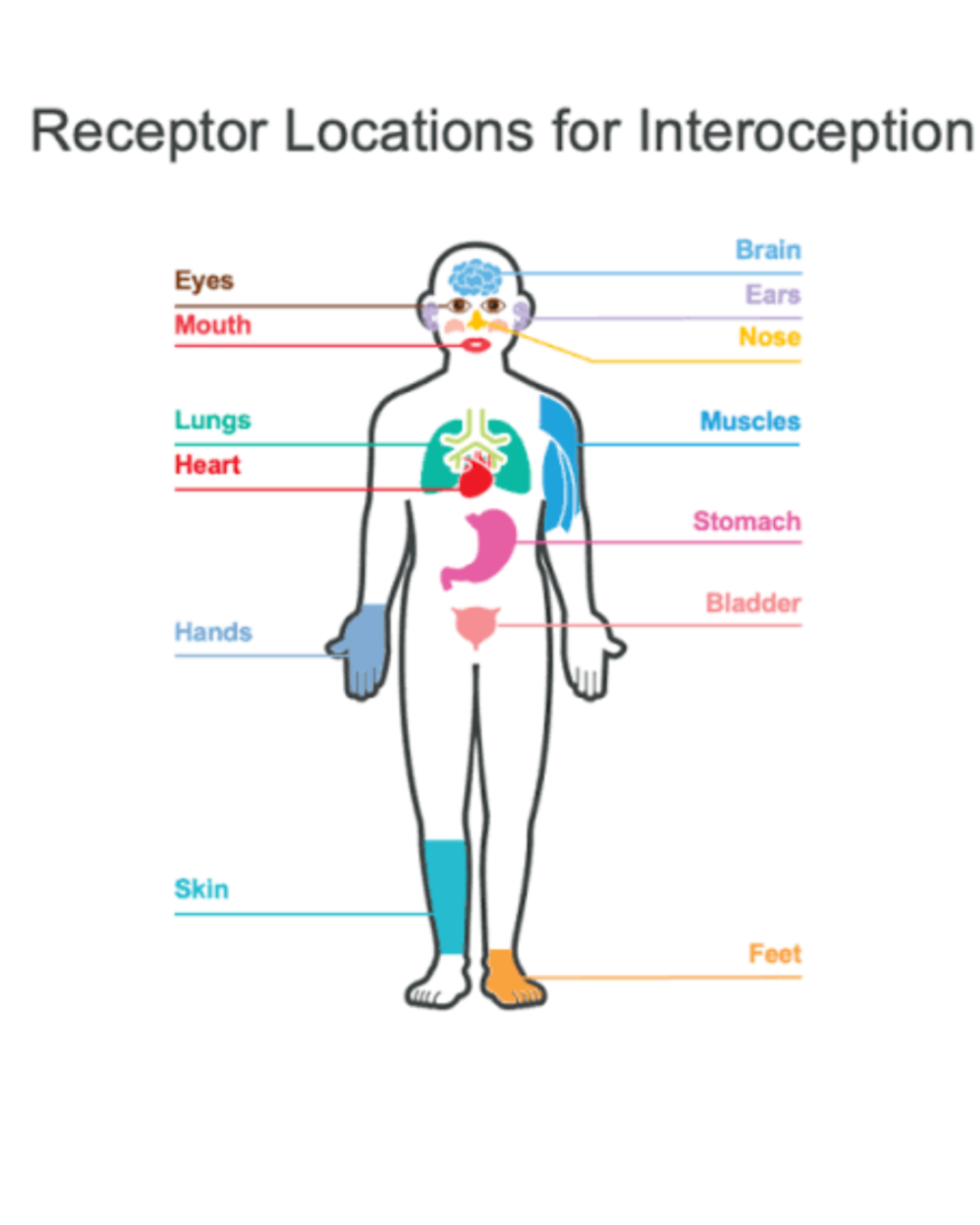
How it Works
Noticing a body signal is only one part of interoception. Children also develop the ability to interpret and understand what these sensations might mean and identify how to respond to their needs.
Notice → Interpret → Respond
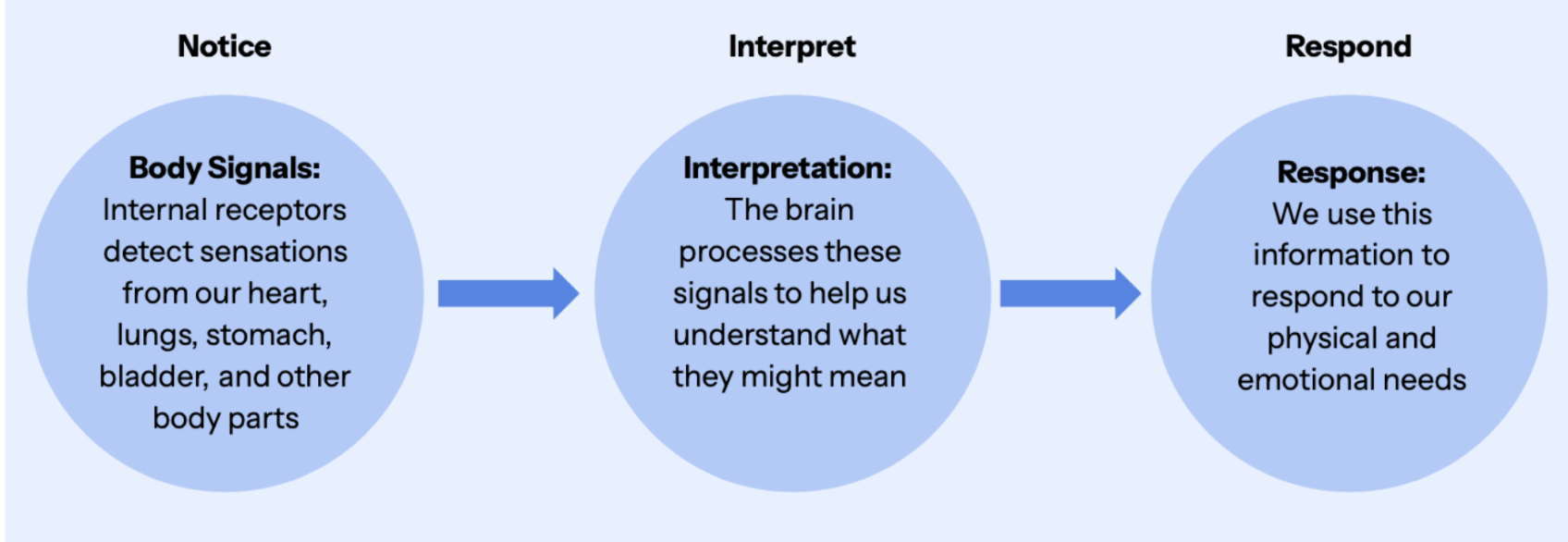
For example, a child may:
Notice: "My mouth feels dry."
Interpret: "I might be thirsty."
Respond: "I can drink some water."
These three steps help children make sense of their internal experiences and gradually develop greater independence in responding to their physical and emotional needs.
Why does Interoception Matter?
Interoception plays an important role in many of the activities children participate in every day, including eating, drinking, toileting, sleeping, playing, and managing emotions.
Understanding Emotions and Supporting Self-Regulation
Interoception is also closely connected to emotional awareness and self-regulation. Emotions often involve changes in how our bodies feel.
For example, a child might experience:
Butterflies in their stomach when nervous.
A tight jaw or tense muscles when frustrated.
A faster heartbeat when excited.
Low energy or a feeling of heaviness when sad.
However, the same body sensation can mean different things! A racing heartbeat might mean a child is excited, nervous, physically active, or feeling unwell.
As children become more aware of their body signals, they can begin to recognize patterns between their physical sensations and emotional experiences and begin to identify strategies or communicate when they need support.
For example, a child might notice their hands are clenched and their muscles feel tight, recognize that they may be getting frustrated, and decide to ask for a break.
Recognizing Physical Needs
Our body signals provide important clues about what we might need throughout the day, such as food, water, rest, a bathroom break, or support from someone else.
For example, a child might notice:
A growling or empty stomach when hungry.
A dry mouth when thirsty,
Pressure in their bladder when needing to use the bathroom.
Heavy eyelids or low energy when tired.
As children develop greater awareness of these signals, they can gradually build their ability to recognize and respond to their needs.
For example, a child who notices early signs of fatigue may be better able to ask for a break before becoming exhausted.
Importantly, recognizing body signals does not mean children will automatically be able to know what they need or regulate their emotions independently. Children still need support, connection, and co-regulation from trusted adults as they develop these skills.
What can Interoception Differences Look Like?
Every child experiences body signals differently. Some children notice internal sensations very strongly, while others may have difficulty noticing them until they become intense.
Heightened Awareness of Body Signals
Other children experience internal body sensations very intensely. Even small changes in how their body feels may be uncomfortable, distracting, or overwhelming.
For example, a child might:
Become distressed by slight changes in their heartbeat or breathing.
Experience minor physical discomfort as very intense.
Feel overwhelmed by multiple body sensations happening at once.
Have difficulty determining which sensations need their attention
For these children, even small body sensations can feel overwhelming, making it difficult to focus on daily activities or understand what their body needs.
Lower Awareness of Body Signals
Some children have difficulty noticing internal sensations or may only recognize them once they become very strong.
For example, a child might:
Not recognize hunger until they are extremely hungry or irritable.
Have difficulty recognizing the need to use the bathroom until it becomes urgent.
Not notice fatigue until they are exhausted.
Have difficulty recognizing early signs of frustration until they are already overwhelmed.
For these children, their body signals may not be noticeable enough to provide early clues about what their body needs.
Interoceptive differences are not always about noticing too little or too much. A child might notice a sensation but have difficulty understanding what it means, communicating it, or knowing how to respond.
These challenges do not necessarily mean a child is ignoring their body's needs. They may genuinely have difficulty noticing, interpreting, or responding to what their body is communicating.
Several factors can influence how children notice, interpret, and respond to their body signals, including stress, medications, busy or overwhelming environments, and how adults recognize and respond to their needs and experiences.
Understanding these differences can help parents approach their child's experiences with curiosity, empathy, and support rather than assumptions.
How can Parents Help Build Interoceptive Awareness?
-
Children can learn about body sensations by hearing adults describe their own experiences.
For example:
"My heart is beating faster after running!"
"My hands feel warm after rubbing them together."
"My stomach is growling. I think I'm getting hungry so I’m going to get a snack!."
"My muscles feel tight. I think I'll take a little break."
Modelling helps children develop vocabulary for body sensations without putting pressure on them to identify or describe their own feelings. -
Everyday activities provide natural opportunities to explore body sensations.
After physical activity: Following a game of tag or an obstacle course, invite your child to notice their breathing, heartbeat, or body temperature.
During mealtimes: Explore how their stomach feels before and after eating.
During quiet activities: After stretching or resting, encourage your child to notice whether anything feels different in their body.
During daily routines: Coming inside from the cold, washing hands in warm water, or getting ready for bed can provide opportunities to notice changes in body sensations.
You might ask:
"What do you notice in your body right now?"
"Does anything feel different after that activity?"
"Do your hands feel warm, cool, or something else?"
"Is there anything your body might need?"
-
As children become more familiar with their body sensations, they can begin exploring what those signals might mean.
For example:
Notice: "My stomach feels empty".
Understand: "I might be hungry".
Respond: "I could have a snack".
The same process can be used to explore emotions:
Notice: "My muscles feel tight".
Understand: "I might be feeling frustrated".
Respond: "I could ask for help or take a break".
Keep in mind that the same sensation may mean different things for different children.
Rather than assuming what your child is feeling, encourage them to explore their own experiences.
-
Interoception activities should be playful, supportive, and pressure free.
Some children may enjoy talking about their body sensations, while others may prefer using visuals, movement, or simply listening to an adult model body awareness language.
It is okay if your child says "I don't know" or does not notice anything!
Avoid repeatedly questioning children, correcting their descriptions, or telling them how their body should feel.
The goal is not to identify every body signal perfectly. It is to gradually build awareness, curiosity, and confidence in understanding their own bodies!
When Might an Occupational Therapist be Helpful?
If difficulty noticing, understanding, or responding to body signals is affecting your child's everyday activities, such as eating, toileting, sleeping, emotional regulation, or participation in daily routines, an Occupational Therapist (OT) may be able to help!
OT’s can explore how your child experiences sensory information and develop individualized strategies to support body awareness, emotional regulation, and participation in meaningful everyday activities.
Through play, movement, body awareness activities, and family centred strategies, OTs can help children better understand their unique body signals and explore ways to respond to their needs.
Do you have questions regarding your child’s body awareness, sensory processing, or emotional regulation? Please reach out to info@ascendpeds.com, and they would be happy to help!